A chair that opens a door is useful. A chair that can also lift a cup to someone's mouth and stop exactly when the rider wants is a different kind of engineering bet entirely.
- $41.5 million ARPA-H award funding the five-year program
- 3.5 million Americans use power wheelchairs, per industry estimates
- 5.5 million people nationwide use some form of mobility device, per a 2025 federal report
- Built on Meta's open-source DINOv3 and SAM computer-vision models
More than a ride across the room
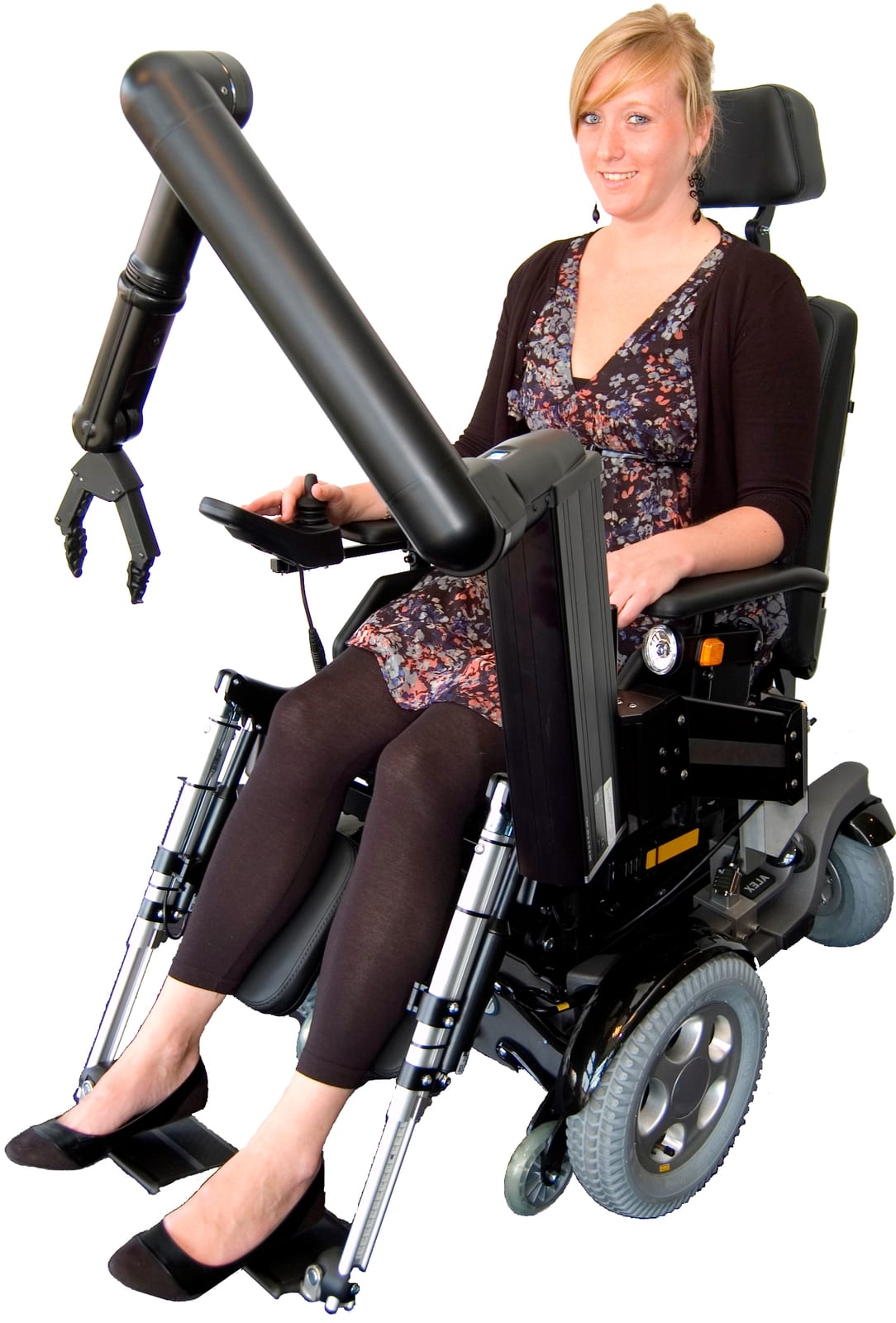
The Robotic Assistive Mobility and Manipulation Platform, or RAMMP, pairs a powered wheelchair with a robotic arm, an AI perception system, an assistive-technology operating system, and a digital-twin simulation environment. The University of Pittsburgh's Human Engineering Research Laboratories leads the five-year effort, which began in September 2025 with funding from the Advanced Research Projects Agency for Health.
Purdue University's Institute for Accessible Science, a partner on the project, describes RAMMP as a full stack rather than a single gadget: the chair, the arm, software that interprets a scene in real time, an operating system built specifically for assistive hardware, and a simulation layer for testing changes safely before they reach a real rider.
Assistive-technology company ATDev is the industry partner building much of the autonomy software. Co-founder Owen Kent, who uses a wheelchair himself, has said the goal is to extend what existing assistive devices can do rather than replace them outright — closing the gap between "the wheelchair got you down the hall" and "the wheelchair also got you the thing on the counter."
Vision, intent, and a dial the rider sets
RAMMP uses computer vision to identify objects and activities in a room, then an AI layer to interpret what the rider is likely trying to do next. The perception system was built using Meta's open-source DINOv3 and SAM vision models, and ATDev has also been working with Meta's AI for Good program to extend those capabilities further.
You decide, task by task, how much the chair does.
That's how ATDev describes the control philosophy behind the system. Full automated help on one errand, and none on the next, are meant to be settings a rider chooses — not a fixed level of assistance baked into the hardware. News coverage of recent demonstrations has shown the arm handling tasks like opening doors, retrieving objects from counters, and assisting with drinking.
Why the scale matters
It's easy to blur how many people this could eventually reach, so the numbers are worth keeping separate. A 2025 report from the Disability Rights Education and Defense Fund estimates roughly 5.5 million people in the United States use a mobility device of some kind. Kent has put the power-wheelchair segment specifically at around 3.5 million people.
DREDF's larger point isn't really about the headcount, though — it's that these devices matter well beyond transportation. For many users, a wheelchair is how they hold onto independence day to day, and the tasks that remain out of reach even after the chair solves getting from room to room are exactly what RAMMP is trying to close. Purdue's Institute for Accessible Science is tracking the program's progress as it moves from lab demonstrations toward real-world testing with riders over the life of the five-year award.