A clock that has never existed before just ran for more than a day without anyone touching it — and it keeps time using the nucleus of an atom, not the electrons orbiting it.
- 24+ hours the prototype ran stable with zero manual intervention
- 1 second of drift every 30 million years, the clock's measured precision
- 10,000x smaller than atoms, which is why thorium nuclei resist outside disturbance so well
- 2024 the year researchers first proved the thorium transition could be triggered with a laser
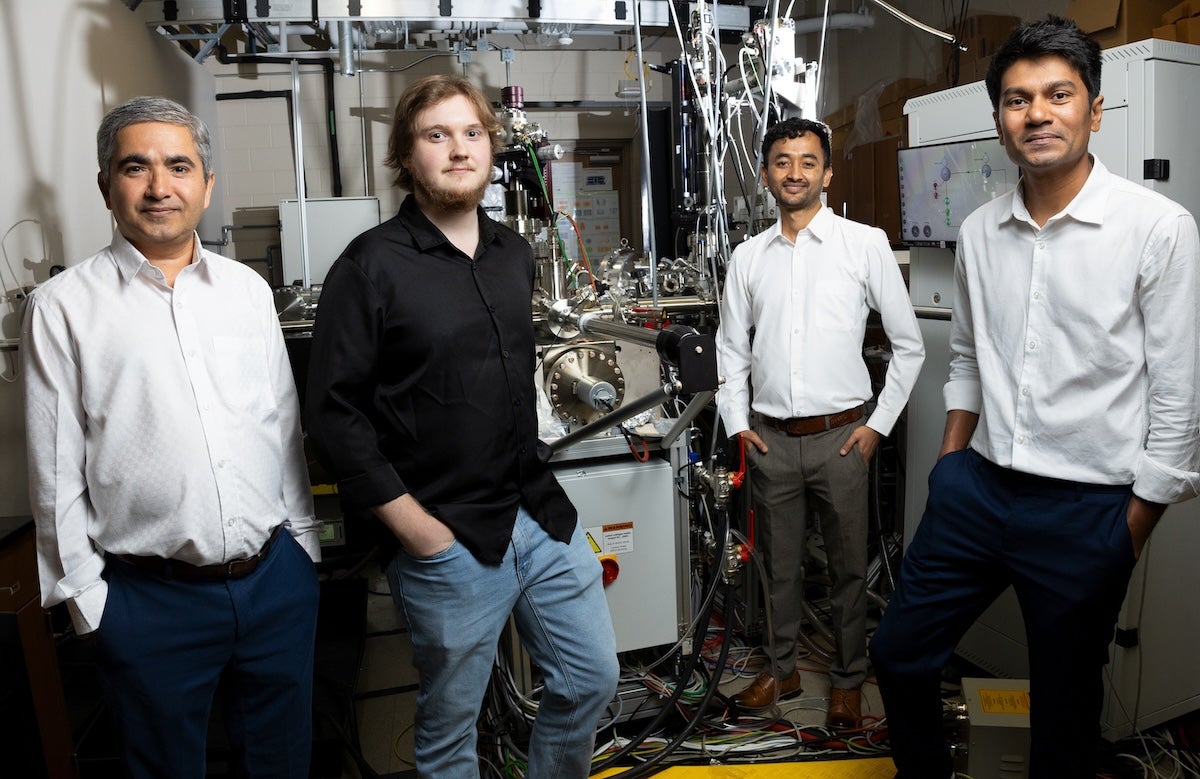
Built by a team led by Prof. Thorsten Schumm at TU Wien, working with Prof. Ekkehard Peik's group at PTB Braunschweig, the device is the world's first self-stabilizing nuclear clock — meaning it corrects its own timekeeping errors automatically, the same trick that makes ordinary atomic clocks so reliable. The results were published in Nature and detailed in a TU Wien press release.
Swapping Atoms for Nuclei
Every atomic clock works the same basic way: a laser excites atoms from one energy state to another, and the frequency at which that happens becomes the steady "tick." Thorium-229 is unusual because its nucleus has two energy states separated by an extraordinarily small gap — small enough that an ordinary laser can nudge it between them, something impossible with virtually every other atomic nucleus.
Schumm's team first proved that transition existed in 2024, then showed the following autumn that it could be harnessed for timekeeping, though only by leaning on a conventional atomic clock for stability. The new milestone removes that crutch entirely. Notably, a separate Chinese research group announced its own atomic nucleus-based clock in the same issue of Nature — becoming only the second team in the world to pull it off, after Vienna and Braunschweig got there first.
"What you really want is a self-stabilizing nuclear clock," Schumm explains. "The basic idea is simple: you have a laser and you have thorium. The laser changes the energy state of the thorium nuclei, and the thorium nuclei are used to stabilize the frequency of the laser."
What Comes Next
At the heart of the device sits a thorium-doped crystal, grown at TU Wien, bathed in laser light. When the laser frequency is exactly right, the thorium nuclei absorb the light; if it drifts even slightly — say, from a temperature fluctuation — absorption drops, and the system automatically corrects the laser back to the right frequency. No separate atomic clock required.
"Atomic nuclei are more than ten thousand times smaller than atoms; they react much more weakly to external disturbances and are therefore much more reliable timekeepers."
The prototype's measured precision, about one part in a quadrillion, isn't yet competitive with the best optical atomic clocks on Earth — but for a first-generation device, Schumm calls it "a fantastic result." His team is already working on stronger lasers and higher-quality thorium crystals to push the precision further.
The payoff for getting there is bigger than a more accurate wristwatch. Precision timekeeping underpins GPS navigation, telecommunications networks, and fundamental physics experiments that hunt for tiny shifts in the constants of nature. A clock built from nuclei rather than electrons could eventually detect those shifts at a resolution no atomic clock can reach, giving physicists a genuinely new tool rather than just a more polished version of an old one. For now, the Vienna prototype's real achievement is proving the whole approach works outside a physics theory paper: a laser, a thorium crystal, and a clock that keeps its own time steady, ticking away in a Vienna lab with nobody adjusting it by hand.