Turn the power off, walk away for months, and the picture is still there. Australian researchers have built a reflective display that holds an image indefinitely without drawing a single watt once it is set.
- 0 watts of power needed to keep a static image displayed
- Months, not seconds, is how long the image persists unpowered
- Built from antimony selenide, a light-manipulating metamaterial
- Developed by the ARC Centre of Excellence for Transformative Meta-Optical Systems (TMOS)
A Screen That Doesn't Need to Stay On
Most displays, from phone screens to digital billboards, are power-hungry by design: the image exists only because electricity is continuously refreshing it. The moment the power cuts out, the picture disappears.
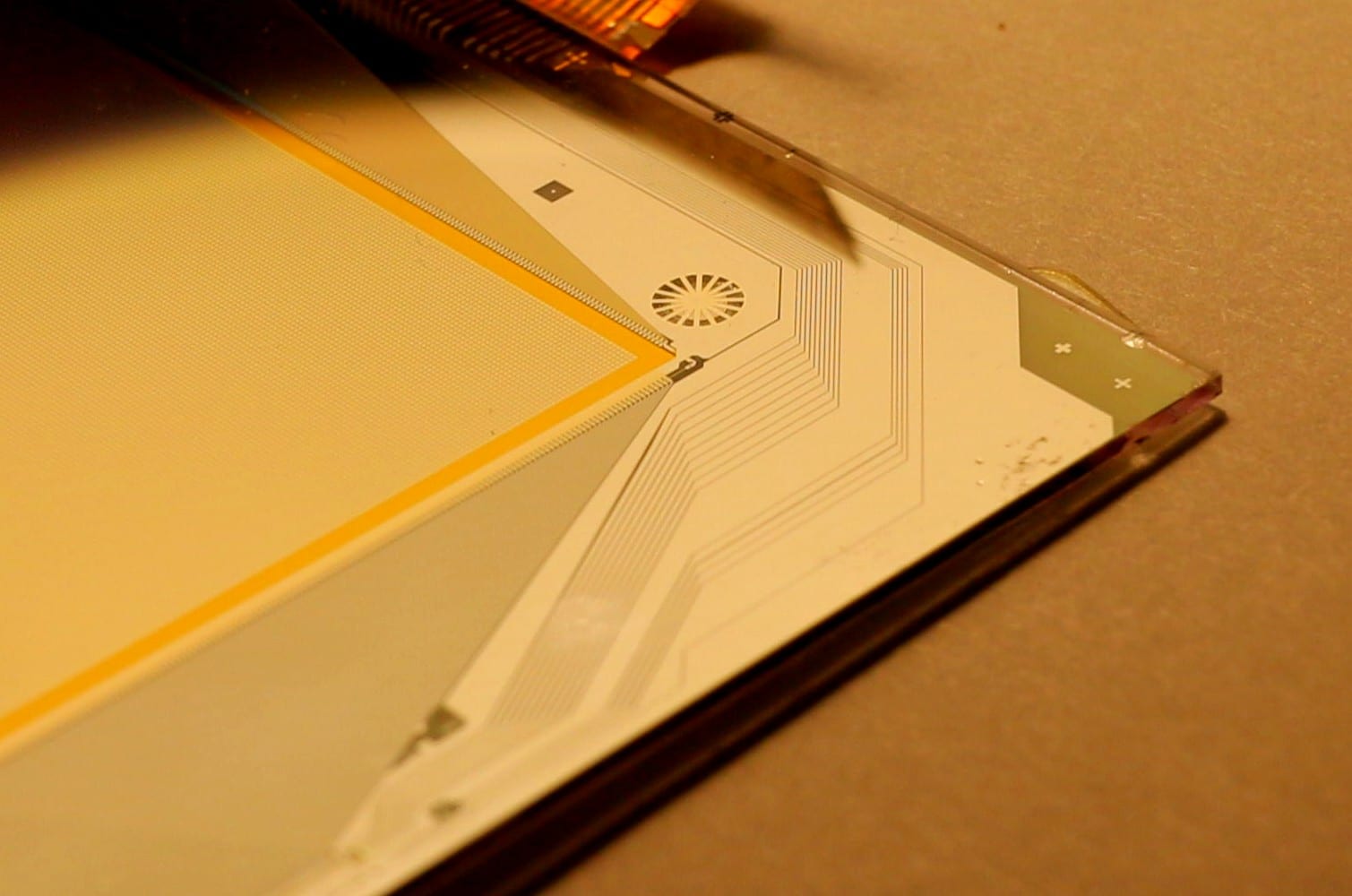
The TMOS team flipped that assumption. Their prototype uses a phase-change metamaterial — antimony selenide — that physically reconfigures itself when triggered by a brief pulse of energy, then holds that configuration on its own, with no ongoing power required to maintain it.
Because the material's optical properties change permanently (until deliberately reset), the display behaves more like a printed page than a conventional screen. Light reflects off the fixed structure to form the image, the same basic principle behind e-paper devices already used in e-readers.
Why Zero-Power Screens Matter
A display that sips power only when the image changes — and nothing in between — has obvious appeal for anything that shows mostly static information: price tags, transit signage, outdoor advertising, wearable indicators, or sensor readouts in remote locations without reliable power.
Conventional e-paper already offers some of this efficiency, which is why e-ink displays dominate e-readers and retail shelf labels. What makes the TMOS approach notable is the materials science underneath it: metamaterials engineered at a scale smaller than the wavelength of visible light, giving researchers finer control over color and contrast than older reflective display technologies typically achieve.
The image remains visible for months after power is removed, because the metamaterial's physical state — not an electrical current — is what's actually forming the picture.
That persistence is the headline result, but the research team's broader goal is improving how precisely these meta-optical surfaces can render color and detail, pushing reflective displays closer to the visual quality people expect from powered screens.
From Lab Prototype to Everyday Devices
Turning a laboratory demonstration into a commercial product is still a significant jump. Manufacturing metamaterial surfaces at the scale and cost needed for mass-market signage or shelf labels requires fabrication techniques that are still being refined.
If the approach scales, though, the efficiency case is substantial. Millions of digital price tags and transit displays currently run on batteries that need regular replacement or charging; a display that holds its image for months on a single pulse of energy could sharply cut that maintenance burden and the battery waste that comes with it.
The work comes from TMOS, an Australian Research Council Centre of Excellence focused on meta-optics, and was detailed in a write-up from TechXplore. Reflective, low-power displays have been a research target for years precisely because the payoff — genuinely disposable-free, near-zero-energy screens — would ripple through everything from retail to remote environmental monitoring.
For now, the antimony selenide prototype is a proof of concept rather than a product on shelves. But it is a concrete demonstration that a display can remember a picture the way paper does: not because it's trying to, but because physics is doing the holding.