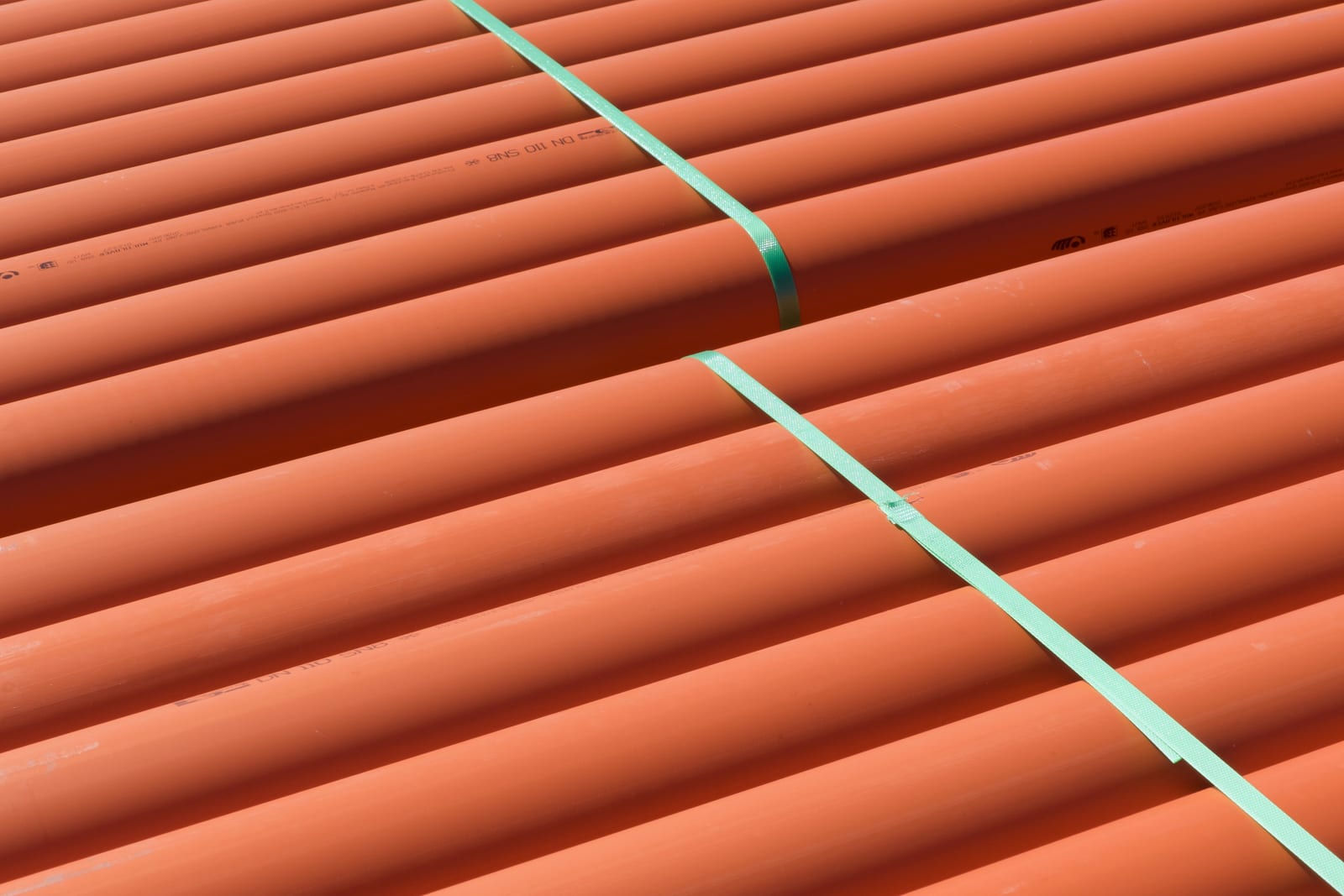
Old plumbing pipes, window frames and expired credit cards could soon end up inside your car's engine, after Virginia Tech chemists found a way to turn one of the world's hardest plastics to recycle into a high-performance lubricant.
- 158°F — the temperature the plastic mixture is heated to
- 3 hours — how long the reaction takes to produce usable oil
- 2 prior peer-reviewed breakthroughs from the same lab that paved the way
- 4 outside institutions that helped test and validate the new oil
A Problem Plastic Finds a New Job
Polyvinyl chloride, or PVC, is everywhere in daily life: plumbing, window frames, credit cards, vinyl flooring. It is also notoriously hard to recycle, because its chlorine content and additives for flexibility or heat resistance complicate standard recycling methods. Most discarded PVC simply ends up in a landfill.
Led by chemist and chemical engineer Guoliang "Greg" Liu, a Virginia Tech team found a process that converts PVC into polyalphaolefin, a key building block of synthetic engine oils. The research, published in the journal Nature, tackles plastic waste and the environmental cost of manufacturing lubricants at the same time.
From Sticky Mess to Synthetic Oil
To make the lubricant, researchers dissolve PVC in a solvent, then add aluminum trichloride and alpha-olefins, a class of hydrocarbons already used in synthetic lubricant manufacturing. Heating the mixture to 158°F for three hours yields a thick lubricating oil chemically similar to the base oils used in premium synthetic motor oil.
The discovery came from a failed experiment. Liu's team originally tried swapping chlorine atoms on PVC's molecular chains for other chemical groups, hoping for a useful new material. Instead they kept getting soft, sticky, useless goo. Liu eventually asked a different question: what if, instead of modifying those long chains, the team just kept breaking them into smaller pieces?
That pivot, carried out by graduate researchers Eric Munyaneza Nuwayo, Connor S. Thompson and Abby Civiello — Liu's self-described "three musketeers" — produced the lubricant breakthrough.
Building on Earlier Wins
The project grew out of two previous discoveries from Liu's lab, published in Science and Nature Sustainability, which showed other plastic waste could be converted into surfactants used in soaps and detergents. Encouraged by that success, the team moved on to the tougher challenge of PVC.
"We have proved that it is feasible to use plastic waste to make high-performance lubricants, and these lubricants are green — they can meet the emerging needs for sustainability by the market." — Guoliang "Greg" Liu, Virginia Tech
To confirm the oil's real-world potential, Liu brought in outside experts: Ali Erdemir at Texas A&M tested its lubricating performance, William Goddard at Caltech ran the underlying chemical computations, and Virginia Tech economist Xi Chen modeled what it would take to manufacture the oil at scale.
The team, based at Virginia Tech, still has to prove the process works beyond the lab bench. But if it scales, the approach could give one of the world's most stubborn waste plastics a genuinely useful second life — and give engines a greener oil to run on. As Liu puts it, lubricants are "the silent hero out there," quietly keeping machinery running without anyone noticing, until now.